The Indian electric vehicle revolution is no longer a distant dream. In 2026, electric cars are becoming a serious alternative to petrol and diesel vehicles, offering modern technology, lower running costs and a different approach to sustainable transportation. But which electric car should you actually buy?
Introduction: If Jesus Christ Arrived in India in 2026, What Car Would He Choose?
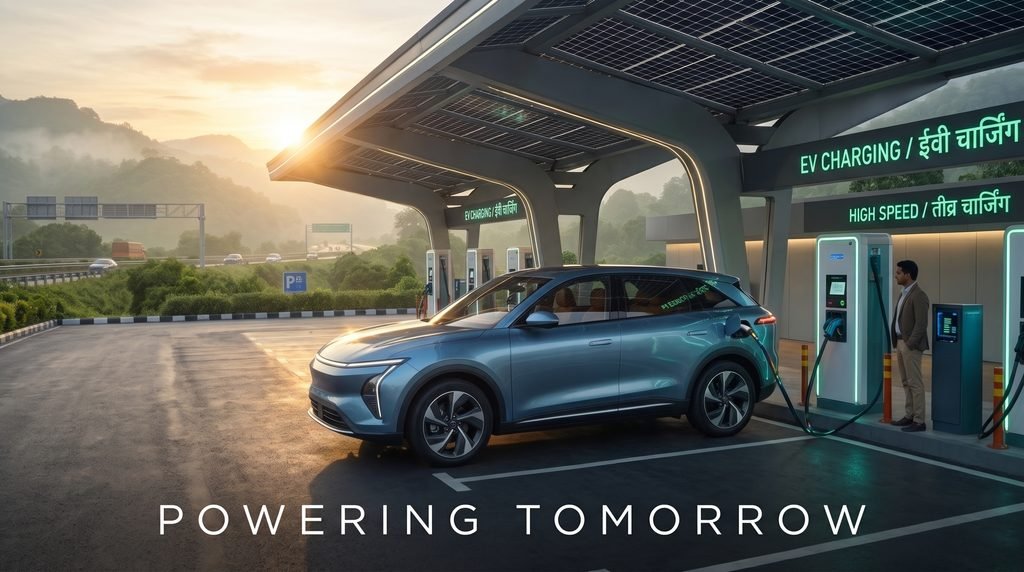
Imagine Jesus Christ arriving in India in November 2026. Instead of travelling through ancient villages, he finds himself surrounded by modern highways, congested city roads, electric charging stations and thousands of automobiles.
As he walks through an automotive showroom, he notices something unusual. People are no longer discussing only horsepower, petrol mileage and engine capacity. They are comparing battery capacity, driving range, charging speed and environmental impact.
A young Indian buyer approaches him and asks, “If you had to choose one car for the future, which would you buy?”
Jesus looks at the different vehicles and replies with a simple thought: the best choice is not necessarily the most expensive or powerful one. It is the one that fulfils your needs without creating unnecessary burdens on others or the environment.
This fictional modern-day encounter raises an important question for Indian consumers: What are the best electric cars in India in 2026?
With manufacturers such as Tata Motors, Mahindra, MG, Hyundai and Maruti Suzuki expanding their electric vehicle portfolios, buyers now have more choices than ever.
From affordable electric hatchbacks to premium electric SUVs, the Indian market offers vehicles for different budgets and driving requirements.
In this Aatomobil guide, we compare the best electric cars in India, explore their prices, examine their claimed driving ranges and explain what buyers should consider before investing in an EV.
Why Are Electric Cars Becoming Popular in India?
Electric vehicles are gaining attention because they offer a different ownership experience from conventional petrol and diesel cars.
Here are five important reasons behind their growing popularity.
1. Lower Running Costs
Electric cars generally cost less to operate per kilometre when charged using reasonably priced residential electricity.
Unlike petrol vehicles, EVs do not require conventional engine oil changes, spark plugs or exhaust-system maintenance.
However, actual savings depend on electricity tariffs, vehicle efficiency, public charging costs and annual driving distance.
2. Reduced Local Air Pollution
Battery-electric vehicles produce zero tailpipe emissions while driving.
This is particularly relevant in Indian cities where traffic-related pollution is an important environmental concern.
However, EVs are not entirely emission-free throughout their lifecycle. Electricity generation, battery production and recycling also contribute to their overall environmental footprint.
3. Smooth Driving Experience
Electric motors deliver instant torque, making acceleration smooth and responsive.
The absence of conventional gear changes and reduced engine noise can make city driving more comfortable.
4. Improving Charging Infrastructure
India is gradually developing its public EV charging ecosystem.
The Ministry of Power has issued guidelines to support accessible, reliable and safe EV charging infrastructure. The guidelines also recognise private charging at residences and offices.
Reference: Government of India’s EV Charging Infrastructure Guidelines.
5. More Manufacturers Are Entering the Market
The entry of established manufacturers into the electric vehicle segment is increasing competition.
Maruti Suzuki’s e Vitara, Hyundai’s Creta Electric, Mahindra’s electric SUVs and Tata’s expanding EV portfolio demonstrate how the Indian automotive industry is evolving.
According to Reuters’ February 2026 report, Maruti Suzuki launched its first electric vehicle in India, the e Vitara, with a battery-rental option intended to reduce the initial purchase cost.
Source: Reuters – Maruti Suzuki launches its first EV in India.
Best Electric Cars in India 2026: Top 10 Models
The following models represent some of the most interesting options available to Indian buyers.
The prices are indicative ex-showroom starting prices from published November 2026 listings. Actual prices depend on the city, variant, battery configuration and applicable offers.
| Electric car | Starting price (approx.) | Published claimed range |
|---|---|---|
| Tata Tiago EV | ₹6.99 lakh | 226–285 km |
| Tata Punch EV | ₹9.79 lakh | 275–355 km |
| Tata Nexon EV | ₹12.49 lakh | 275–489 km |
| MG Windsor EV | ₹14.85 lakh | 332–449 km |
| Maruti Suzuki e Vitara | ₹16.19 lakh | 440–543 km |
| Hyundai Creta Electric | ₹18.03 lakh | 420–510 km |
| Mahindra BE 6 Sporteq | ₹19.45 lakh | Variant-dependent |
| Tata Harrier EV | ₹21.79 lakh | 538–627 km |
| Mahindra XEV 9e | ₹21.90 lakh | 522–656 km |
| Tata Sierra EV | ₹18.79 lakh* | Up to 665 km* |
The Sierra EV listing and its availability, price and range should be reconfirmed with Tata Motors before publication or purchase. Do not treat an indicative listing as confirmation of a currently deliverable variant.
Sources: CarDekho’s November 2026 electric car listings and Autocar India’s electric car database. Range figures are variant-dependent and may reflect different certification standards.
1. Tata Tiago EV – An Affordable Electric Car for City Driving
The Tata Tiago EV is an attractive option for buyers who want to enter the electric vehicle market without spending a substantial amount.
Its compact dimensions make it suitable for Indian urban environments, where narrow streets, traffic congestion and limited parking space can make driving challenging.
The vehicle is particularly relevant to people who commute regularly between home, office and nearby destinations.
Key highlights:
- Indicative starting price: ₹6.99 lakh.
- Published claimed range: approximately 226–285 km.
- Compact hatchback design.
- Practical city-driving dimensions.
- Multiple battery and variant options.
Why should you consider it?
The Tiago EV is worth considering if your daily driving distance is relatively predictable and you have access to home charging.
It may not be the best option for frequent long-distance highway journeys, but it offers an accessible starting point for electric mobility.
2. Tata Punch EV – A Practical Electric Micro-SUV
The Tata Punch EV combines SUV-inspired styling with an electric powertrain.
Its compact design and elevated seating position make it appealing to buyers who want the practicality of an SUV without purchasing a particularly large vehicle.
Key highlights:
- Indicative starting price: ₹9.79 lakh.
- Published claimed range: approximately 275–355 km.
- Compact SUV styling.
- Multiple battery configurations.
- Modern infotainment and convenience features.
Why should you consider it?
The Punch EV is a sensible option for smaller families and urban commuters.
It offers a useful balance between affordability, practicality and electric performance.
Buyers should compare the battery options carefully because the driving range and equipment vary across versions.
3. Tata Nexon EV – A Strong All-Round Family Choice
The Tata Nexon EV is one of the most recognisable electric SUVs in India.
It combines the familiar proportions of a compact SUV with an electric powertrain, making it an appealing choice for buyers moving away from petrol and diesel vehicles.
Key highlights:
- Indicative starting price: ₹12.49 lakh.
- Published claimed range: approximately 275–489 km.
- Five-seat SUV configuration.
- Connected-car technology.
- Modern infotainment and safety equipment.
Tata Motors has also introduced additional technology and safety features in its Nexon EV range.
In September 2025, Tata announced ADAS features for the Nexon EV 45, including lane-related assistance and autonomous emergency braking features on the specified variant.
Source: Tata Motors – Nexon EV ADAS announcement.
Why should you consider it?
The Nexon EV is worth considering if you want a versatile electric family vehicle.
Its combination of cabin practicality, SUV styling and different battery options makes it a strong contender in the mainstream EV segment.
4. MG Windsor EV – Comfort Meets Electric Mobility
The MG Windsor EV takes a slightly different approach to electric mobility.
Instead of concentrating entirely on SUV styling, it focuses on interior space, passenger comfort and everyday usability.
Its spacious cabin makes it an interesting choice for families who frequently travel together.
Key highlights:
- Indicative starting price: ₹14.85 lakh.
- Published claimed range: approximately 332–449 km.
- Spacious passenger cabin.
- Large infotainment display.
- Comfortable seating and modern interior design.
Why should you consider it?
The Windsor EV is particularly attractive if cabin comfort is a priority.
It is also worth investigating MG’s Battery-as-a-Service (BaaS) purchasing arrangement, where available.
Under this model, the battery cost is separated from the vehicle’s initial purchase price, with a separate battery-use payment.
Remember to calculate the complete ownership cost, including battery charges, electricity, insurance and financing.
5. Maruti Suzuki e Vitara – A Major Addition to India’s EV Market
Maruti Suzuki’s entry into the electric SUV segment is an important development for the Indian automotive industry.
The e Vitara combines the company’s established automotive presence with a new electric platform.
It offers different battery configurations and is positioned for buyers seeking a practical family SUV.
Key highlights:
- Indicative starting price: ₹16.19 lakh.
- Published claimed range: approximately 440–543 km.
- Two battery capacity options.
- SUV body style.
- Five-seat configuration.
Why should you consider it?
The e Vitara deserves attention from buyers who want an electric SUV from a familiar manufacturer.
Its battery-rental option is also noteworthy because it provides an alternative to paying the entire battery cost upfront.
Reuters reported that Maruti introduced a battery rental arrangement alongside the e Vitara’s Indian launch in February 2026.
Source: Reuters – Maruti Suzuki’s e Vitara launch and battery rental plan.
6. Hyundai Creta Electric – A Familiar SUV Goes Electric
The Hyundai Creta Electric brings the popular Creta nameplate into the electric vehicle segment.
It is designed for buyers who appreciate the conventional Creta’s SUV format but want to experience electric driving.
Hyundai offers two battery configurations.
Key highlights:
- Indicative starting price: ₹18.03 lakh.
- 42 kWh battery option.
- 51.4 kWh long-range battery option.
- Claimed MIDC range of 420 km and 510 km respectively.
- CCS2 charging standard.
- Modern infotainment and connected technology.
Hyundai’s official specifications confirm the battery capacities, certified ranges and charging information.
Source: Hyundai India – Official Creta Electric specifications.
Why should you consider it?
The Creta Electric is a strong contender for families who want a modern electric SUV with a familiar design philosophy.
It is also available under a Battery-as-a-Service arrangement.
In July 2026, Hyundai announced BaaS pricing starting at ₹10.99 lakh, with a separate battery payment starting at ₹3.90 per kilometre.
Source: Hyundai – Official BaaS announcement.
7. Mahindra BE 6 Sporteq – For Performance and Technology Enthusiasts
Mahindra has developed a distinctive identity in the electric SUV market through its BE range.
The BE 6 Sporteq is aimed at customers who appreciate futuristic styling, performance-oriented engineering and modern technology.
Key highlights:
- Indicative starting price: ₹19.45 lakh for the specified 59 kWh variant.
- Multiple battery configurations.
- Advanced digital cockpit.
- Sporty exterior design.
- Rear-wheel-drive electric architecture.
Mahindra’s official August 2026 announcement provides variant-wise pricing and details of its 59 kWh, 70 kWh and 79 kWh battery options.
Source: Mahindra – Official BE 6 Sporteq announcement.
Why should you consider it?
The BE 6 Sporteq is worth exploring if you want an electric SUV that combines performance, distinctive styling and technology.
However, compare the variants carefully. A larger battery may offer additional driving range, but it also increases the purchase price.
8. Tata Harrier EV – A Larger Electric SUV for Families
The Tata Harrier EV brings electric technology into a larger SUV format.
It targets buyers who want more cabin space, a substantial road presence and a modern electric powertrain.
Key highlights:
- Indicative starting price: ₹21.79 lakh.
- Published claimed range: approximately 538–627 km.
- Spacious SUV format.
- Modern infotainment technology.
- Multiple battery and equipment configurations.
Why should you consider it?
The Harrier EV is worth considering if you want a larger family SUV rather than a compact city-oriented electric vehicle.
Before purchasing, evaluate highway range, charging performance and the availability of charging facilities on your regular routes.
9. Mahindra XEV 9e – A Premium Electric SUV Experience
The Mahindra XEV 9e is positioned towards customers seeking a premium electric SUV.
Its design, technology-oriented interior and multiple battery configurations make it an interesting choice in the higher-priced EV segment.
Key highlights:
- Indicative starting price: ₹21.90 lakh.
- Published claimed range: approximately 522–656 km.
- Premium cabin presentation.
- Modern infotainment systems.
- Different battery and variant options.
Why should you consider it?
The XEV 9e is worth considering if your budget allows you to explore a premium electric SUV.
It is particularly relevant to buyers who prioritise technology, range and road presence.
10. Tata Sierra EV – A New Electric SUV Contender
The Sierra EV is an important name in Tata Motors’ electric vehicle portfolio.
Its SUV-oriented positioning and modern electric platform make it an interesting model to follow.
Key highlights reported in market listings:
- Indicative listed starting price: ₹18.79 lakh.
- Published range figures extending to approximately 665 km.
- SUV-focused design.
- Different battery configurations.
Why should you consider it?
The Sierra EV is worth monitoring if you want a larger electric SUV with a focus on driving range and design.
However, prospective buyers should verify its actual retail availability, confirmed variant specifications and delivery timelines directly with Tata Motors before making a purchase decision.
Which Is the Best Electric Car in India for Your Budget?
There is no universal winner. The best electric vehicle depends on your budget, driving requirements, family size and charging access.
| Requirement | Models worth considering |
|---|---|
| Affordable city EV | Tata Tiago EV |
| Compact electric SUV | Tata Punch EV |
| All-round family vehicle | Tata Nexon EV |
| Cabin comfort | MG Windsor EV |
| Established-brand electric SUV | Maruti Suzuki e Vitara |
| Premium technology | Hyundai Creta Electric |
| Sporty electric SUV | Mahindra BE 6 Sporteq |
| Larger family SUV | Tata Harrier EV |
| Premium electric SUV | Mahindra XEV 9e |
The most expensive vehicle is not necessarily the best one for your lifestyle.
For example, a person travelling 25 kilometres daily within a city may not need the same battery capacity as someone regularly covering 300 kilometres between cities.
Important Things to Check Before Buying an Electric Car
Buying an EV requires a different evaluation process from buying a petrol or diesel car.
1. Real-World Driving Range
Manufacturers generally advertise certified driving ranges based on standard testing procedures.
Actual driving range can vary depending on:
- Driving speed.
- Traffic conditions.
- Air-conditioning usage.
- Road conditions.
- Passenger and luggage weight.
- Outside temperature.
- Battery condition.
Never assume that a car will achieve its advertised range in every driving situation.
2. Home Charging Availability
Home charging is one of the biggest conveniences of electric vehicle ownership.
Before buying an EV, check whether your parking space has an appropriate electrical connection and whether your residential society permits charger installation.
Also confirm the cost of charger installation and the electrical requirements with the manufacturer.
3. Public Charging Infrastructure
If you frequently travel outside your city, investigate charging stations along your regular routes.
Check connector compatibility, charging speeds, payment arrangements and the availability of operational charging points.
The Ministry of Power’s charging infrastructure guidelines provide an important policy framework for the development of EV charging facilities in India.
Reference: Ministry of Power – Charging Infrastructure Guidelines.
4. Battery Warranty
The battery is one of the most important components of an electric car.
Before purchasing, compare:
- Battery warranty duration.
- Kilometre limitations.
- Battery capacity-retention conditions.
- Warranty exclusions.
- Repair and replacement arrangements.
Always read the manufacturer’s official warranty documentation.
5. Resale Value
Electric vehicle resale values depend on several factors, including battery health, brand reputation, model popularity and technology improvements.
Do not assume that an EV will automatically retain its value better than a petrol vehicle.
6. Service Network
A strong service network makes vehicle ownership easier.
Check whether authorised service centres and trained EV technicians are available near your residence.
Electric Cars vs Petrol Cars: Which Makes More Financial Sense?
One of the biggest questions for potential EV buyers is whether an electric car genuinely saves money.
Consider the following hypothetical calculation.
Assumptions:
- Annual driving distance: 15,000 km.
- Petrol car efficiency: 15 km per litre.
- Petrol price: ₹105 per litre.
- EV consumption: 15 kWh per 100 km.
- Electricity price: ₹8 per kWh.
Petrol car annual fuel cost
15,000 ÷ 15 = 1,000 litres.
1,000 × ₹105 = ₹1,05,000.
Electric car annual electricity cost
15,000 × 15 ÷ 100 = 2,250 kWh.
2,250 × ₹8 = ₹18,000.
The estimated difference is ₹87,000 annually.
This is an illustrative calculation, not a guaranteed saving. Actual costs depend on charging losses, vehicle efficiency, electricity tariffs, public charging rates and driving conditions.
The purchase-price difference, insurance, financing, depreciation and maintenance must also be considered.
The correct way to evaluate an electric car is to compare its total cost of ownership over several years rather than looking only at its running cost.
The Environmental Side of Electric Mobility
Returning to our fictional Jesus Christ narrative, imagine him standing on a busy Indian road in 2026.
He sees thousands of vehicles moving through traffic and recognises the importance of responsible development.
Electric cars can help reduce local air pollution because they do not produce tailpipe emissions while driving.
However, it would be inaccurate to describe them as completely pollution-free.
Battery manufacturing requires minerals and energy. Electricity generation can also involve fossil fuels, depending on the energy mix.
The long-term environmental benefits of electric mobility therefore depend on cleaner electricity generation, responsible mineral sourcing, efficient manufacturing and battery recycling.
The Bureau of Energy Efficiency provides information about electric mobility, charging and common questions concerning EV adoption.
Reference: Bureau of Energy Efficiency – Electric Mobility.
The larger lesson is that technology should improve people’s lives while encouraging more responsible use of natural resources.
Frequently Asked Questions About the Best Electric Cars in India
1. Which is the best electric car in India in 2026?
There is no universal winner. The Tata Nexon EV is worth considering as an all-round family vehicle, the Punch EV for compact SUV buyers, the MG Windsor EV for cabin comfort and the Mahindra BE 6 Sporteq for technology and performance.
2. Which is the cheapest electric car in India?
Among the established mainstream passenger-car models covered in this article, the Tata Tiago EV has an indicative starting price of approximately ₹6.99 lakh in published listings.
Smaller electric vehicles may be available at lower prices, depending on their category.
3. Which electric car offers the longest driving range?
Among the models discussed here, the Mahindra BE 6 range and Tata Sierra EV listings advertise particularly high claimed range figures.
The exact result depends on the variant and certification cycle. Buyers should compare equivalent battery configurations rather than relying solely on headline figures.
4. Are electric cars suitable for long-distance travel in India?
Yes. However, long-distance journeys require careful planning.
Battery capacity, real-world highway range, charging speed and public charging availability are important considerations.
5. How much does it cost to charge an electric car?
Charging costs depend on battery capacity, electricity tariffs, charging losses and whether you use home or public charging.
For example, charging 30 kWh at ₹8 per unit costs approximately ₹240 before accounting for charging losses.
6. Are electric cars expensive to maintain?
Electric cars generally have fewer conventional powertrain components than petrol and diesel vehicles.
They do not require conventional engine oil changes or exhaust-system maintenance.
However, tyres, suspension, brakes, electronics, air-conditioning and battery-related components still require attention.
7. Should I buy an electric car in 2026?
An electric car is worth considering if you have convenient charging access, predictable driving requirements and a suitable model within your budget.
If you frequently travel long distances through areas with limited charging infrastructure, carefully evaluate whether an EV fits your requirements.
Final Verdict: Choosing the Right Electric Car in India
India’s electric mobility revolution is entering an exciting phase in 2026.
Buyers now have access to electric hatchbacks, compact SUVs, premium family vehicles and technology-rich electric SUVs.
The Tata Tiago EV and Punch EV are worth considering for city commuters. The Tata Nexon EV and MG Windsor EV offer interesting family-oriented alternatives. The Maruti Suzuki e Vitara and Hyundai Creta Electric bring established manufacturers into the electric SUV market, while Mahindra and Tata are expanding their presence in the premium segment.
Ultimately, the best electric car is not necessarily the one with the biggest battery, the highest claimed range or the most expensive features.
It is the one that fits your daily driving requirements, financial situation and charging arrangements.
The fictional Jesus Christ of 2026 might remind today’s car buyers that progress should not be measured only through speed, luxury or technology. It should also be measured through the wisdom behind our choices.
Drive smart. Choose responsibly. Move towards a cleaner future with Aatomobil.
References and Research Sources
The following sources support the specifications, pricing information, manufacturer announcements and EV-related guidance used in this article.
- CarDekho – Electric Cars in India: Prices, Range and Specifications (2026)
- Autocar India – Electric Cars in India
- Tata Motors – Nexon EV ADAS Announcement
- Hyundai India – Creta Electric Official Specifications
- Hyundai India – Creta Electric Battery-as-a-Service Announcement
- Mahindra – BE 6 Sporteq Official Announcement
- Reuters – Maruti Suzuki e Vitara Launch in India, February 2026
- Bureau of Energy Efficiency – Electric Mobility
- Government of India – EV Charging Infrastructure Guidelines
Editorial disclosure: This is an independently prepared automotive buying guide, not a first-hand road-test report. Manufacturer specifications and third-party market listings are used for research. Prices and availability can change without notice. Aatomobil recommends verifying the latest variant, price, warranty and specifications with the relevant manufacturer or authorised dealership before purchasing.
Article updated: 17 November 2026.